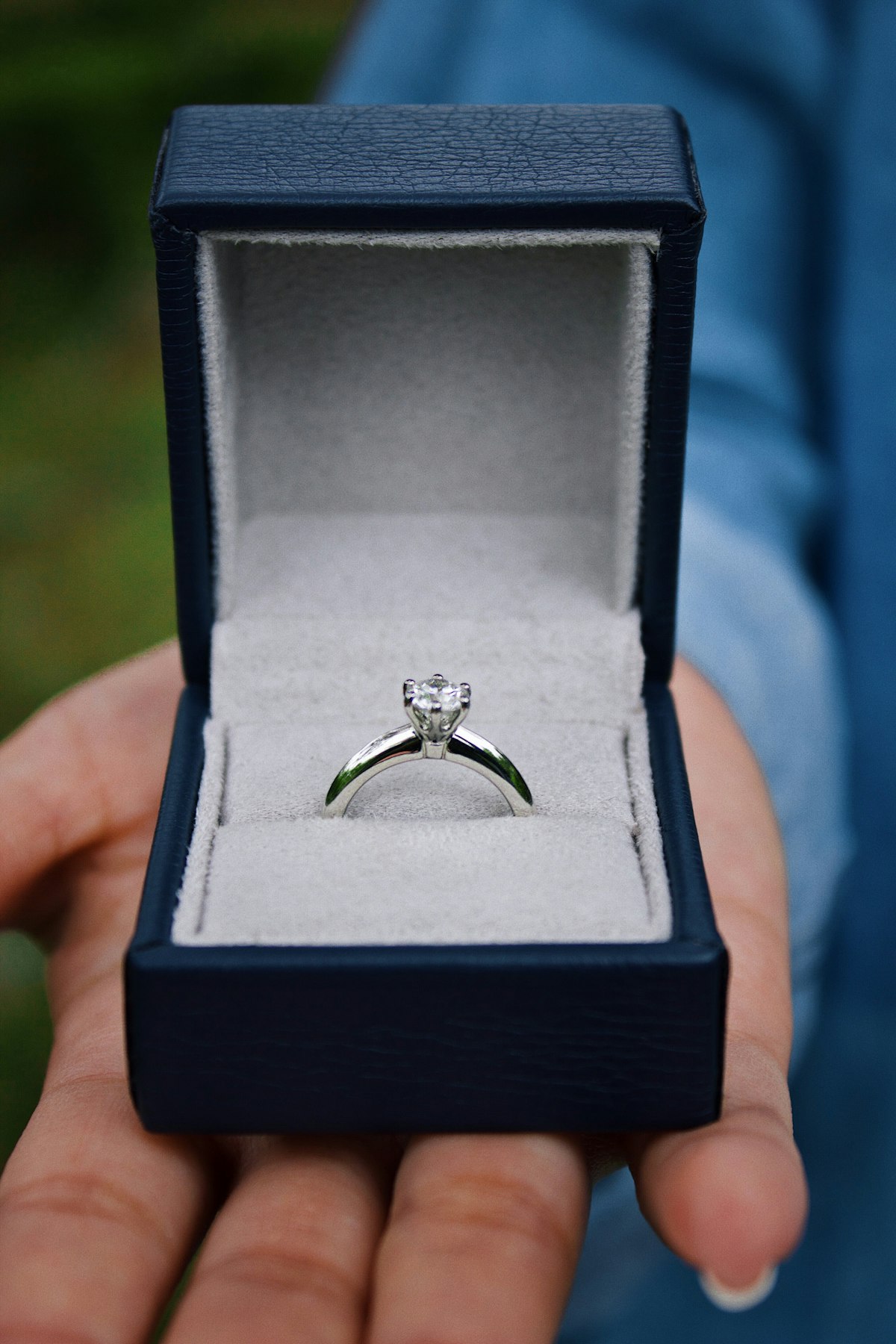
A pear shaped diamond, often called a teardrop, blends the soft curve of an oval with the elegant point of a marquise. The result is one of the most graceful shapes you can choose for an engagement ring. It looks larger than a round diamond of the same weight, flatters the hand, and carries a romantic, slightly unexpected character. Here is what to know before you choose one.
What Is a Pear Shape?
A pear shape is a brilliant cut diamond with one rounded end and one pointed end. Because it uses brilliant facets, it sparkles brightly, similar to an oval or round. Its outline is asymmetrical from end to end but should be perfectly symmetrical from side to side.
The shape suits both classic and modern designs. To see the range of looks, browse a selection of pear cut engagement rings in solitaire and halo settings.
Why a Pear Looks Bigger
Like other elongated shapes, a pear spreads its weight along a longer outline. A 1 carat pear typically measures around 8.5 by 5.5 mm, larger than a 1 carat round at roughly 6.4 mm across. Worn with the point toward the fingertip, it also makes the finger look longer and slimmer.
Choosing a Ratio
Most pear shaped diamonds fall between 1.45 and 1.75 in length-to-width ratio. Around 1.55 to 1.65 is the classic teardrop. Lower ratios look rounder and fuller, while higher ratios create a long, slender stone. Personal preference matters most, so compare a few examples side by side.
Symmetry Is Everything
With a pear, small symmetry issues are easy to spot. The point should line up with the center of the rounded end, and the two shoulders should curve evenly. Watch for flat or bulging shoulders and a rounded end that looks squashed. These details make the difference between an elegant teardrop and an awkward one.
The Bow-Tie and Grades
Most pears show a bow-tie, a dark band across the middle caused by the elongated shape. A good cut keeps it faint, so look at a photo or video of the actual stone. Brilliant facets hide small inclusions well, so SI1 to VS2 clarity is usually eye clean. Avoid inclusions near the point, and expect color to show slightly at the tip. G to I color works well in white metal, while yellow gold lets you go a grade lower.
Which Way Should the Point Face?
Traditionally, a pear is worn with the point toward the fingertip, which elongates the hand. Some people prefer the point facing the wrist for a softer, less common look. There is no wrong answer, but it is worth trying both orientations before the stone is set.
Protecting the Point
The point is the most delicate part of a pear shaped diamond. A V-prong wraps it securely and reduces the risk of chipping, while a halo adds protection around the whole stone and boosts its visible size. For everyday wear, choose a setting that clearly covers the tip. When comparing options, look for pear shaped diamond rings with a V-prong or halo that guards the point.
Lab-Grown or Natural?
Pear shapes are available in both natural and lab-grown diamonds. Lab-grown stones are physically identical to mined diamonds and typically cost much less, making it easier to choose a larger size or a cleaner grade. Natural diamonds appeal to buyers who value rarity.
Final Thoughts
A pear shaped diamond offers grace, visible size and a touch of individuality. Choose a ratio you love, check symmetry and the bow-tie closely, and make sure the point is protected. With those boxes ticked, you will have a teardrop ring that feels both classic and personal.