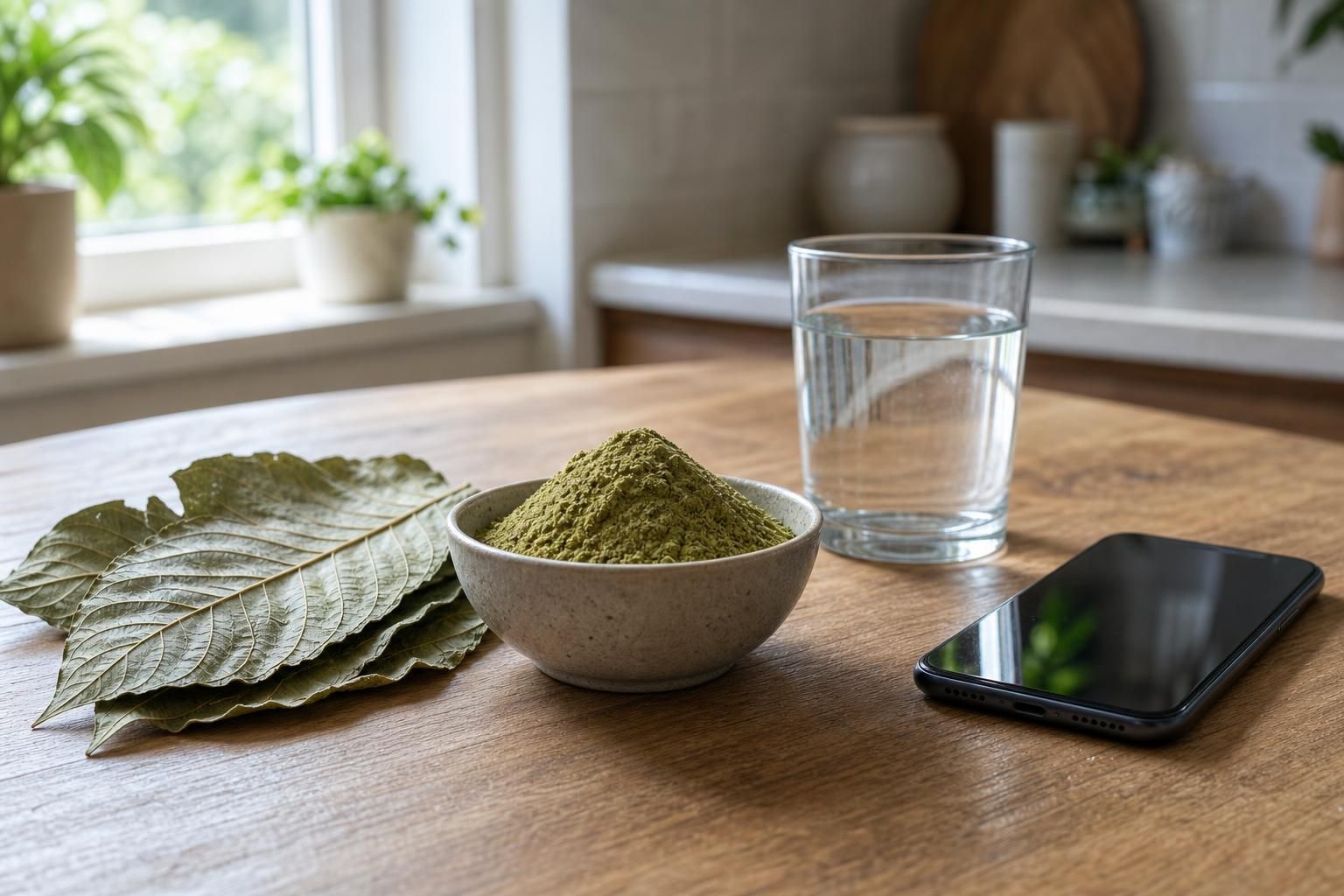
Kratom is sold openly in smoke shops, gas stations and online stores, often in brightly packaged capsules, powders and drinks. Because it is easy to buy and marketed as "natural," many people assume it is harmless. Yet a growing number of adults find that what started as a pick-me-up or a way to ease pain has quietly turned into daily dependence they cannot shake.
This guide explains what kratom is, why dependence develops, what withdrawal feels like and how to tell when it is time to look for professional help.
What Kratom Is and How It Affects the Body
Kratom comes from the leaves of Mitragyna speciosa, a tree native to Southeast Asia. Its main active compounds, mitragynine and 7-hydroxymitragynine (often called 7-OH), act on the same opioid receptors in the brain that respond to drugs like oxycodone and morphine.
At lower amounts, people often report stimulant-like effects such as alertness and energy. At higher amounts, kratom tends to produce sedation and pain relief similar to opioids. This dual effect is part of why it appeals to such a wide range of people, from shift workers to those managing chronic pain or trying to step down from prescription opioids on their own.
The U.S. Food and Drug Administration has not approved kratom for any medical use and has repeatedly warned consumers about its risks. Regulators have raised particular concern about concentrated 7-OH products, which are far more potent than traditional leaf powder and are increasingly sold in tablets and shots.
How Dependence Develops
Because kratom acts on opioid receptors, the brain adapts to regular use. Over weeks or months, many people notice they need more to feel the same effect. They may start dosing several times a day, carrying kratom everywhere and planning their schedule around the next dose.
Dependence often builds without anyone noticing. Kratom is legal to buy in most of the United States, it is not included in many standard drug screens and it rarely carries the stigma of other substances. That combination makes it easy to keep using long after it has stopped helping.
Warning Signs of Kratom Dependence
Kratom use may have crossed into dependence when someone notices several of these patterns:
- Needing larger or more frequent doses to feel normal
- Feeling sick, anxious or restless when a dose is late
- Spending significant money on kratom products each week
- Switching to stronger extracts or 7-OH products to get the same effect
- Trying to cut back and being unable to
- Hiding use from a partner, family or employer
- Using kratom alongside alcohol, benzodiazepines or other opioids
That last point deserves special attention. Combining kratom with other sedating substances increases the risk of serious harm, including dangerous breathing problems.
What Kratom Withdrawal Feels Like
Kratom withdrawal often resembles opioid withdrawal, though symptoms vary depending on how much and how long someone has been using. Common symptoms include:
- Muscle aches, bone pain and restless legs
- Runny nose, sweating and chills
- Nausea, diarrhea and stomach cramps
- Irritability, anxiety and low mood
- Insomnia and intense cravings
For people who have been taking high doses or concentrated 7-OH products, withdrawal can be severe and difficult to manage at home. The discomfort alone drives many people back to using, even when they sincerely want to stop.
Why Quitting Alone Is So Hard
Many people try to taper on their own by cutting doses gradually. Some succeed, but many get stuck in a cycle of cutting down, feeling awful and going back up. Without support, it is easy to lose confidence after a few failed attempts.
There is also the question of why someone started using kratom in the first place. If it was helping to manage chronic pain, anxiety, depression or an earlier opioid problem, stopping without a plan for those issues leaves a gap that is hard to fill.
What Professional Treatment Involves
Effective kratom addiction treatment usually begins with a medical assessment to understand dose, frequency, product type and any other substances involved. From there, care often includes:
- Medically assisted detox to manage withdrawal symptoms safely and comfortably, with 24-hour monitoring
- Medication support where appropriate, guided by a physician
- Individual therapy such as cognitive behavioral therapy to address triggers, cravings and thought patterns
- Treatment for co-occurring conditions like anxiety, depression or chronic pain
- Family involvement to rebuild trust and prepare the home for recovery
- Aftercare planning so the person leaves with a clear support system in place
Residential care can be especially helpful for people whose use has escalated to concentrated products or who have tried to quit several times. Being away from easy access, with clinical support around the clock, gives the body and mind room to stabilize.
How to Talk to Someone You Are Worried About
If you suspect a loved one is struggling, choose a calm moment and lead with care rather than accusations. Describe specific changes you have noticed, such as missed plans or mood swings, and ask open questions. Avoid ultimatums in the first conversation. Let them know you will help them explore options, and offer to make the first call together.
Finding the Right Level of Care
Not everyone needs the same level of support. Someone with mild, short-term use may do well with outpatient therapy, while someone with heavy daily use of 7-OH products may need detox followed by residential treatment. A good program will assess honestly and recommend what fits, not what is most convenient.
For people who value privacy, a small setting and individualized attention, programs that offer luxury drug rehab in Los Angeles combine medical care with a calm, home-like environment. iRely Recovery, an 11-bed residential program in Northridge, treats kratom and 7-OH dependence with medically assisted detox, evidence-based therapy and family support.
Kratom dependence is real, common and treatable. If it has started to control your days, reaching out for an assessment is a practical first step toward feeling like yourself again.